

The Tech Backbone:
Architecting the Future of GPSR
At the Climate Software Lab (CSL), our work transcends code. We architect the digital nervous system powering GPS Renewables, bridging visionary leadership and operational reality. By aligning every line of code with business goals, we’ve turned the GPSR Technological Advancement Strategy into a living ecosystem. We believe technology should be a bridge, not a silo. Our platform integrates the strategic needs of Finance, HR, and Procurement with the technical demands of our Design Engineering, O&M, and Bioprocess teams.
From maintaining HSE and Quality standards to optimizing O&M, the CSL ecosystem ensures every department is empowered to scale. We aren’t just supporting the business—we are building the digital engine that drives it forward.
1. Business Process Automation
CSL reduces manual error and frees teams for strategic tasks by integrating complex workflows into automated systems.
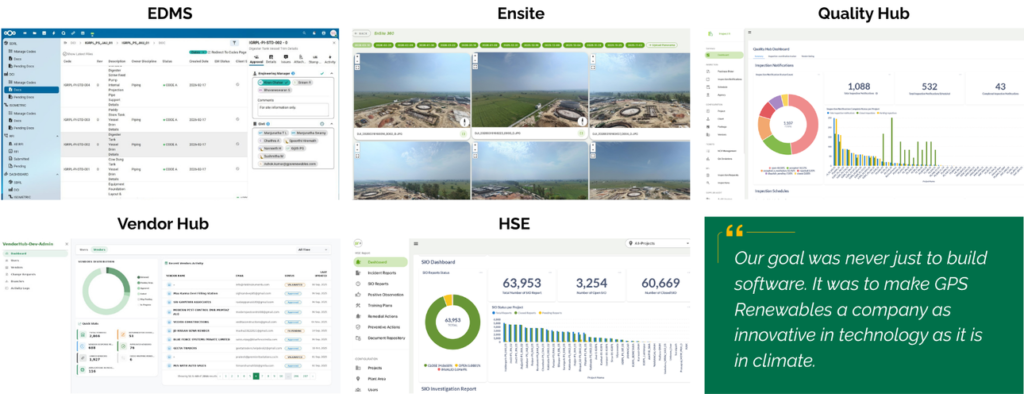
Vendor Ecosystem: VendorHub automates the lifecycle from onboarding and verification to Odoo ERP registration.
External Collaboration: Our Transmittal system automates the review process between vendors, agencies, and GPSR. The CLIENT application serves as a portal for direct client connections and digital approvals.
Design Continuity: We manage site comms and design changes through automated DCN and RFI workflows within our EDMS.
Engineering Precision: Our EDMS manages the full technical spectrum-including Doc Hub (repository), SDR (docs), DCI (engineering docs), Isometrics (piping diagrams), and RFIs-allowing site teams and engineering to stay perfectly aligned.
2. Optimising Operational Efficiency
We bridge the gap between office planning and site execution, pushing renewable energy boundaries through advanced analytics and smarter workflows.
Project Governance: OpenProject serves as our central hub for planning, tracking assignments.
Intelligent Plant Operations: We’ve turned manual shift logs into real-time intelligence. Combining O&M data from Shiftkeeper with bioprocess results from Labdesk (across 12 CBG locations) provides deep insights into plant performance.
Advanced Analytics & Visualization: Using Grafana, we create powerful data visualizations from O&M and lab data, enabling management to make high-level, data-driven strategic decisions.
Performance Monitoring: The BioUrja Dashboard and BioUrja Manager allow for the specific management and evaluation of BioUrja projects across all sites.
Document Lifecycle: Doc Vouch streamlines internal reviews, reducing administrative lag and acting as a central repository.
Site-to-Management Visibility: Ensite provides drone views for progress tracking, while Measure It allows live-tracking of project milestones & progress.
3. Driving Digital Transformation
Digitalization moves GPSR from fragmented data to a unified, secure cloud environment.
Secure Infrastructure: Netbird VPN and Keycloak SSO ensure a seamless, fortified single sign-on experience for all applications.
Internal Communication: Open Search and Nextcloud ensure transparency and secure data accessibility across the organization.
Asset & System Management: GLPI and Fleet D-System track administration and IT assets, ensuring hardware evolves alongside software.
4. Quality & Safety Assurance
Compliance and risk management are hard-coded into our strategy to protect people and projects.
Health & Safety: The HSE Application manages incident reporting and hosts essential HSE trainings and Master documents.
Uncompromising Quality: Qualityhub and the Inspect It app facilitate third-party and internal inspections, managing NCR and QA deviations to ensure excellence.
Strategic Land Choice: Our Land Assessment Application analyzes environmental risks, like flood zones, to inform land selection.
Manpower & Compliance: Crewnet automates contract management, attendance, and manpower planning. It tracks site presence against schedules and synchronizes with HROne for streamlined HR operations.
The next chapter isn’t just about connectivity-it’s about intelligence. AI tools are moving fast, and CSL’s opportunity lies in applying them to on-the-ground problems. The challenge isn’t imagining AI use cases-it’s having the systems and context already in place to use them well. Four years of building has prepared us for this.