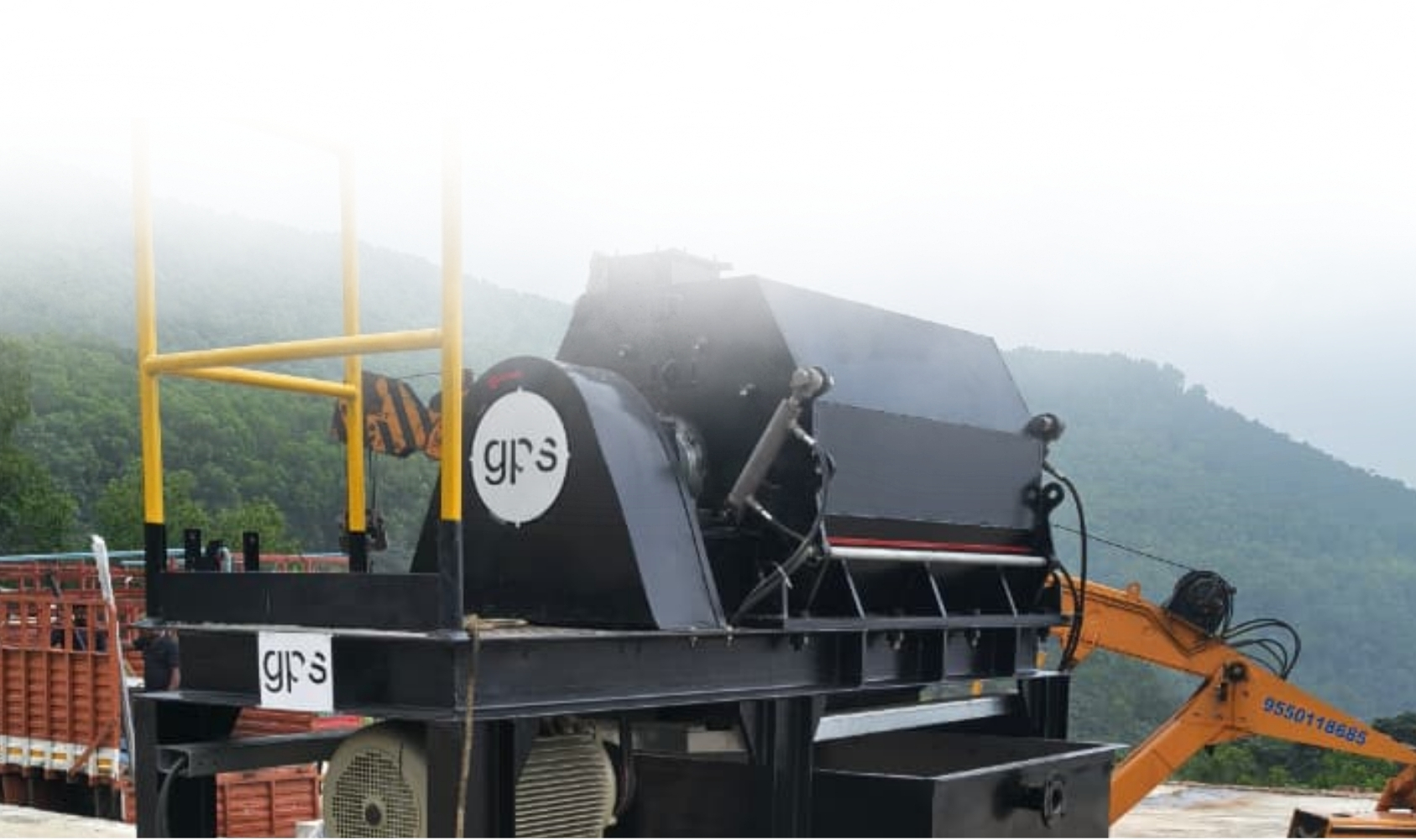

OptiMill
Homegrown Breakthrough in
Organic Waste Pre-Processing
Rajesh Ayyappasur & Manoj M
GPS Renewables has successfully developed, demonstrated, and commercialized a milestone in-house technology — the OptiMill, our proprietary hammer mill designed specifically to pre-process segregated organic waste.
As many in the field know, organic waste arriving at biogas plants is far from uniform. It comes with variability in moisture, fibrous content, particle size, and—unfortunately—its fair share of unwanted contaminants.
Hammer mills are mechanical devices used to crush fibrous feedstock into smaller, more digestible particles. This size reduction increases substrate surface area, accelerating microbial breakdown during anaerobic digestion and enhancing biogas yield.
Traditional hammer mills, often borrowed from related industries, are simply not built to handle the complexity of the organic waste arriving at biogas plants.
That’s why OptiMill was born. Designed for India. Designed for Biogas. Designed for Reliability.
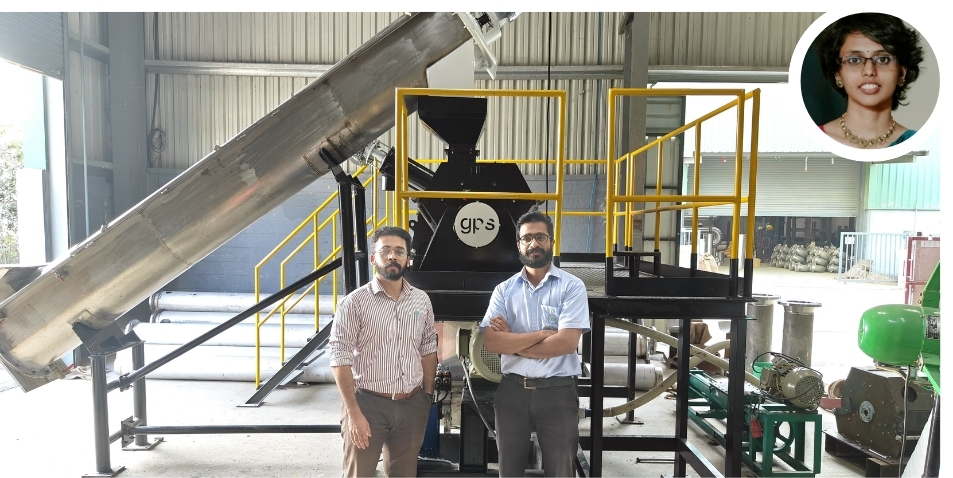
OptiMill made at the GPS factory for the Tirupati Project
Instrumental in this development were design team members Alphin Pereira & Ananthan B R (in pic), and Amala Shankar (inset).
Why OptiMill stands out
Easier Operations:
The machine is engineered for smooth feeding, stable performance, and lower operator fatigue. OptiMill adapts better to the “personality” of Indian organic waste, reducing manual interventions.
Faster Processing:
OptiMill achieves higher throughput without compromising uniformity of output — a key requirement for efficient digestion downstream.
Final-Level Segregation:
A highlight of OptiMill is its integrated reject screw, which automatically separates plastics, textiles, metals, and other non-biodegradable contaminants during milling.
This feature eliminates one of the biggest bottlenecks in waste pre-processing and is currently unmatched by any competing technology in India.
From Innovation to Commercial Reality
Over the past year, we’ve developed OptiMill, tested it internally, and moved it into commercial use. Early deployments report smoother operations, fewer digester interruptions, and significantly better feedstock quality. With OptiMill, we’ve identified real industry challenges, engineered solutions suited to our conditions, and scaled them responsibly. More innovations are on the way—but for now, OptiMill deserves the “Made by GPS” spotlight.